







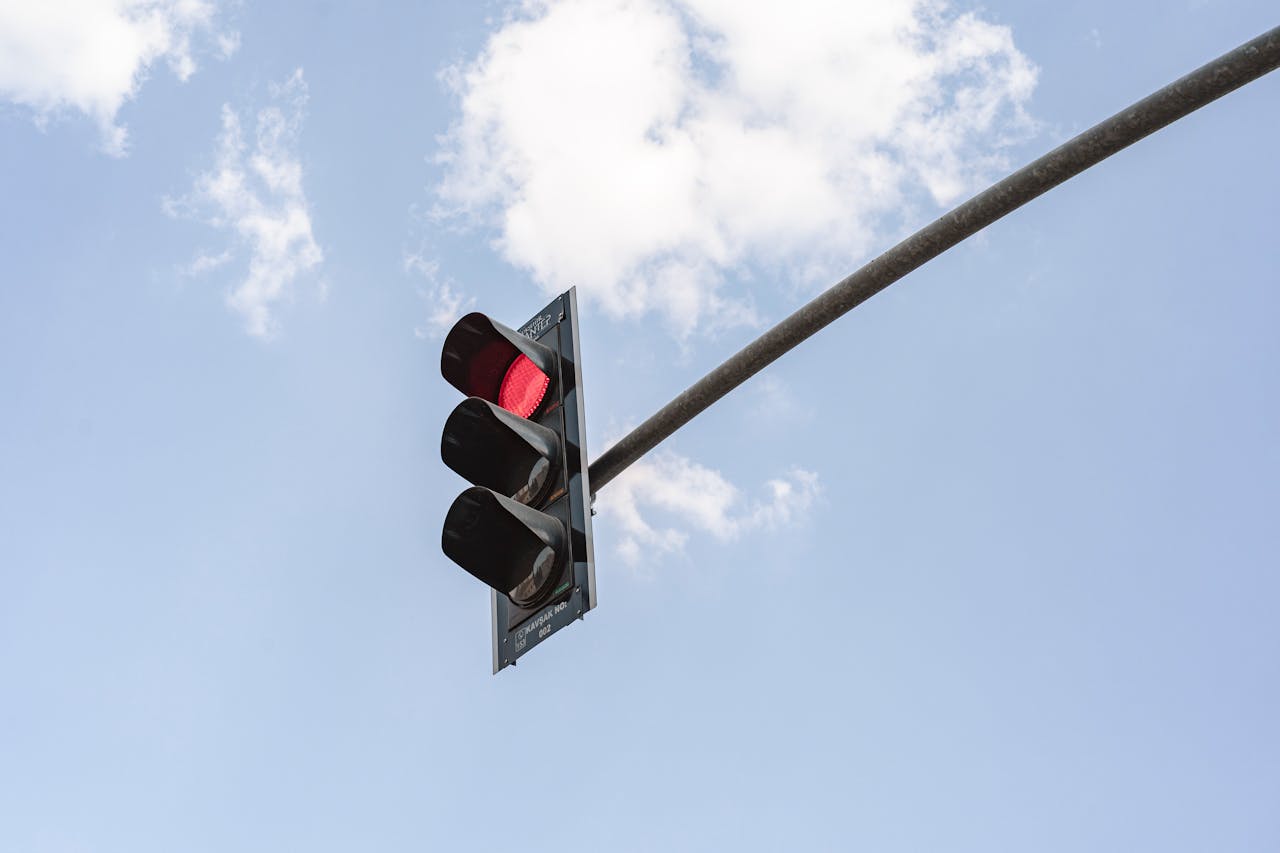
Turning right on a red light may feel routine for drivers in Ontario, but it’s also one of the most misunderstood – and ticketed – manoeuvres on the road. Every year, thousands of Ontario drivers receive fines and convictions not because they ran a red light, but because they didn’t follow the exact rules for turning right on red, especially at intersections with red-light traffic cameras.
Is Turning Right on Red Legal in Ontario?
Yes, but only under strict conditions.
In Ontario, drivers are allowed to turn right on a red light after coming to a complete stop, unless a sign clearly prohibits it. The red light is legally treated like a stop sign for right turns.
Key rule: You must come to a full stop behind the stop line, crosswalk, or before entering the intersection.
A rolling stop is not a stop.
When Turning Right on Red Is NOT Allowed
Even if traffic looks clear, you cannot turn right on red when:
- A sign says “No Right Turn on Red”
- You fail to make a complete stop
- You interfere with pedestrians crossing legally
- You block cyclists or vehicles with the right of way
- Visibility is obstructed and you proceed anyway
Many downtown and school-zone intersections prohibit right turns on red entirely—and red-light cameras are often placed there.
The Pedestrian Rule Most Drivers Forget
Ontario law prioritizes pedestrians. When turning right on red:
- Pedestrians with a walk signal always have the right of way
- You must wait until the crosswalk is completely clear
- Even edging forward into the crosswalk can result in a ticket
Failing to yield to pedestrians is one of the most common reasons drivers are fined—even if no one is hit.
How Red-Light Traffic Cameras Really Work
Red-light cameras in Ontario do not ticket drivers for simply turning right on red. They issue tickets when:
- A vehicle enters the intersection after the light turns red
- The vehicle does not come to a complete stop
- The stop line or crosswalk is crossed without stopping
If your wheels cross the line before stopping—even briefly—the camera may record a violation.
The system captures:
- Time-stamped photos
- Vehicle position before and after the stop line
- Licence plate evidence
Common Right-Turn-on-Red Mistakes That Trigger Tickets
These small habits cause big problems:
- Rolling through the red light
- Stopping after the crosswalk instead of before it
- Turning while pedestrians are still crossing
- Ignoring “No Right Turn on Red” signs
- Assuming cameras only catch straight-through drivers
Many drivers are shocked to receive a ticket because they believed they “basically stopped.”
What Happens If You Get a Red-Light Camera Ticket?
Red-light camera tickets are issued to the vehicle owner, not the driver.
Important points:
- No demerit points
- No driver’s licence suspension
- No direct impact on insurance (in most cases)
However:
- Fines are significant
- Late payment can lead to plate renewal issues
- Multiple tickets raise red flags with insurers over time
And if a police officer – not a camera – issues the ticket, insurance consequences may apply.
Best Practices to Stay Ticket-Free
- Stop fully behind the line
- Pause for a full second before moving
- Scan carefully for pedestrians and cyclists
- Obey posted signage—always
- Treat every red-light camera intersection as “zero-tolerance”
If visibility is poor or the situation feels rushed, wait for the green light. A few seconds can save hundreds of dollars.
Final Reminder for Ontario Drivers
Turning right on red is a privilege, not a free pass. Ontario law allows it only when done correctly—and red-light cameras enforce the rules with no discretion.
Before you turn, remember: Stop completely. Look carefully. Yield fully. Proceed only when legal.
Because in Ontario, the most expensive right turn is the one you rush.
Carlos Perdomo, Paralegal